BINOY MAJUMDAR:: COME BACK, O' WHEEL
An introduction to Binoy Majumdar's poetry
Kaurab
Binoy Majumdar (1934-2006) was a brilliant, eccentric, obscure and controversial poet whose life and work await chapters of penetrating research. Binoy is an extremely rare poet it is hard to find a parallel in the western hemisphere. The intense purity with which geometry, mathematics, science and logistics fill the bone-marrow of his poetry, marks his rare genre. Despite being a fine and talented engineer, a brilliant, innovative mathematician and an even more brilliant poet, Binoy led a rather distraught and disoriented life of extreme poverty. Failed by one-sided love (for Gayatri Chakraborty), he lost his mental composure and attempted suicide several times in his life. At times, he would turn violently schizophrenic. In the 1990s, the state government of West Bengal, upon request from fellow poets, provided some support. It didn't restore his physical and mental health. However, during his stay at the state-run hospital, he wrote a book -"haaspaataale lekhaa kabitaaguchchha' (Hospital Poems) which won him the prestigious national poetry award (Sahitya Academy Purashhkaar). Today, Binoy has a huge following among poets three or four decades younger.
Wikipedia quotes :
"Binoy Majumdar was born in Myanmar (erstwhile Burma) on the 17th of September 1934. His family later moved to what is now West Bengal in India. Binoy loved mathematics from his early youth. He completed 'Intermediate' (pre-University) from the Presidency College of the University of Calcutta. Although he graduated with a degree in mechanical engineering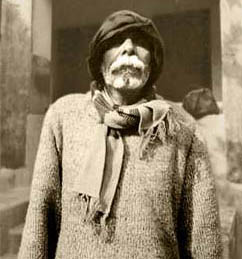 from Bengal Engineering College, Calcutta, in 1957, Binoy turned to poetry later in life. He was fluent in English and Russian and translated a number of science texts from the Russian to Bengali. When Binoy took to writing, the scientific training of systematic observation and enquiry of objects found a place, quite naturally, in his poetry. His first book of verse was Nakshatrer Aloy (in the light of the stars). However, Binoy Majumdar's most famous piece of work to date is Phire esho, Chaka (Come back, O' Wheel, 1962), which was written in the format of a diary. The book is dedicated to Gayatri Chakravorty Spivak, a fellow-Calcuttan and contemporary of Majumdar.
Binoy has often been regarded by critics as a true successor of Jibanananda Das, the poet who revolutionized Bengali Poetry in the post-Tagore era. Like Jibanananda, Binoy drew his material from bountiful nature, the fields and the jungles and the rivers and the fauna of Bengal. But Binoy's originality lay in his attempt to relate the various elements of nature to one another through objective logic and scientific enquiry. In this respect, some critics like Aryanil Mukherjee, refer to the genre of his work as scientific field journal. Binoy Majumdar was also bold and revolutionary in his depiction of sexuality. He abundantly used vivid imagery which were sensually potent and Freudian in essence. In a series of pieces [Aamar Bhuttay Tel (My Oiled Corn-cob)], where he gives an explicit and graphic description of sexual intercourse. Binoy, once again, lays strong emphasis on the physiology of the process, and takes to a journalistic narration.
Binoy has always been somewhat obscure among readers of Bengali Poetry. He was quite ahead of his time in breaking norms of contemporary literature. Some of his poems are difficult to decipher at the first go, and require multiple readings. His writings are unconventional because they often appear as neutral scientific reportage, and not poetry in its usual romaticized self. In this, Binoy readers can perhaps trace back his background as a Mathematician. Binoy builds up all his imagery, nuances, lyricism, and poetic discovery on the skeleton of scientific reasoning and factual observations.
Binoy died in his maternal home in Shimulpur, West Bengal, on December 11, 2006."
New POEMS
Can offer love
I can offer love if you have enabled acceptance
Your amorous hands shed it all
laughs, moonlight, pain, memory,
nothing holds.
That has been my experience. The
doves never fly
in moonlight; yet love, I can
offer.>
Eternal, easy this bestowal just
not to hinder
the sprout, not to let it turn
pale yellow
in the repressed unseen of light, just
to keep it green.
It s that easy, yet pain hands me
a death stone
so I never err, never fall in
love.
Your acceptance remains disabled.
Dove, you re never hurt
if you fell from the branches, you
take wings.>
With the everlasting smile of an ancient
painting
I know you ll leave; wound and agony will silence me.
Translated
by Aryanil Mukherjee
Heard as a child
As a
child I had heard about carnivorous flowers
But I haven t found them inspite of this prolonged search.
Lying on the bed in my tent I have seen the sky sprawl,
I have learned all nearest and brightest stars, which in
true
proposition, are in fact not stars but planets, cold and
dark planets.
Hopeless, inlaid in decadence, bored with dissent, I too
>alone, lay on the floor wasted worm-eaten skin and pulp.
O reproach, self-abhorrence, look, what pallid fruit.
Sometime back pure moonlight fell on soul, on metal fragment
Lightning, caused by casting light, it needs special metals.
No volant birds, except the pigeon, come near humans
today.
They fly in with ease, pick up the given grains and leave
Yet successful moonlight eternally inspires man.
We walk through airs of distinct state and quality;
poisoned, perfumed or icy which only our environment
is limit-ranged to.
To live is not to be space-indulgent
Therefore, O reproach, electric repentance seems just,
Very few books have an appendix.
(Written - 21st September, 1960)
Translated
by Aryanil Mukherjee
Speaking in a foreign tongue
With the caution of speaking in a
foreign tongue
I come to talk about you; past deeds
thwart.
My lady of luster, the worm-eaten poets
who aren t painters, know fanciful
artification may
let your hair fall on the portrait,
draw lips and all
but misses out on the delicate grace of
its owner;
hence we have meditation and divers.
What do you think? Is it an immature
outcome too?
Or a compounding query if animals with
deep-rooted
fur could have clothes made out of
their skin?
Translated
by Aryanil Mukherjee
Just
like music
You just like music;
such disinterested in orgasmic moaning
you seek shelter in a park.
The pale, felled tree has stopped singing.
Yet its roots continue to resurrect buds
they gaze, faces of nonchalance, unchanged since the fall of
the
Gupta Empire, wood sculpture as if; ecstasy of the
bloody centuries transformed into grief-waves of monotony.
I am a tree, a teacosy left behind by the ailing s bed
decrepit dusty languid. No overflowing Indus,
not a single infallible natural calming hand around,
that if caresses my forehead, past erases along with
present.
Malady deep though, poor poet, but not contagious
never transmitted to flower-bodies, never will.
Translated
by Aryanil Mukherjee
The
doctor is me
I am the doctor, whose mistreatment led
to his death which makes me frigid with
pain.
I meet him though, the corpse, in some
phase of return
when an eternal sunshine lights up my
heart.
I keep asking myself if it is normal to
talk to a corpse;
when our eyes meet I am so bashful and
scared,
I look away; body heat of fevered humans
warms the viscera of strange
flowers; and I look for them!
Translated
by Aryanil Mukherjee
When the
noun
When the noun does verb with me
at times with both legs , wraps around
the
pronoun s waist. And I do the verb in
numerous ways like
I go chest down upon the noun and
in two pronoun hands I hold both
shoulders of the
noun while I do the verb.
And then in many repeated smaller verbs
as I m lying
down and sometimes long, longer verbs
too.
Then in another action keeping two
hands of the noun
on its two sides I do the longest verb
and I look at
my noun and observe the pronoun while
the noun s apex
is inside the noun and its base hangs
outside.
Translated
by Aryanil Mukherjee
Moon and
the corncob
Transfixed, I stare at the moon cave,
on the floor
where stands moon, in the middle of a
clear day,
I gaze winkless at the moon cave, its
grass mowed short.
Cave s outer fold shows through the
grass.
From its hidden mouth the fold has
crept out in the open
towards abdomen. When moon walked up to
and stood
on the bed, I asked, no oil massage
today? and the moon
replied, sure we will, but wait a bit
and then she spread the
oilcloth on the bed, extending it to
cover under the pillow
and she goes to the wall rack to fetch
the oil bottle,
pours a bit on her left hand and firmly
grips the corncob.
Even before she held it, the cob was
already erect.
Me and the moon stood face to face on
the floor
As she massaged the corncob in one
hand.
Translated
by Aryanil Mukherjee
Moon and
the corncob
Moon said, while smearing oil on my
corncob
your cob is so thick . I didn t
respond to it but directed her otherwise
smear some more oil on the cobtip ,
but moon paid no heed to it
although she heated it up, the cob, I
mean.
She applied the rest of the oil on its
body and all around and when
done, the moon got up from the floor
where she sat and
walked up to the bed, which too was on
the floor.
Moon slept with her head on the pillow
and raised her legs,
I knelt, took off under my knees, my
shirt and warm trousers.
Then I see the cave, its mouth closed,
even as I spread the legs out
its stays put , completely closed. When
the moon tries to get a grip on the corncob
from where she was lying on the bed, I
said, Wait, let me see if I can get the
cob in myself she readily withdrew
her hold
and as I leaned forward pressing the
tip against the cave door
the corncob slipped in at ease.
Translated
by Aryanil Mukherjee
A few complete poems from Phire Eso Chaka ( Come back, O Wheel) Binoy's innumerably reprinted, redesigned, replenished and refabricated book and his most talked about poetry collection
8th March, 1960
One bright fish flew once
to sink back again into visible blue, but truly
transparent water - watching this pleasing sight
the fruit blushed red, ripening to thick juices of pain.
Endangered cranes fly, escaping ceaselessly,
since it is known, that underneath her white feathers exist
passionate warm flesh and fat;
pausing for short stalls on tired mountains;
all water-songs evaporate by the way
and you then, you, oh oceanfish, you...you
or look, the scattered ailing trees
foliaging expansive greenery of the world
churn it up with their deepest, fatiguing sighs;
and yet, all trees and flowering plants stand on their own
grounds at a distance forever
dreaming of breathtaking union.
Translated by Aryanil Mukherjee
27th June 1961
Like wet gorges our feel
limited, confined; valleys, woods and hills
all covered in fog and clouds for the past few days.
Tell me how much of the multitudes of earthly taste
does the failed buds of a cat s tongue feel ?
Yet all the crisp and subtle, sharp experience,
like flower thorns or the incisiveness of orbits
of distant stars, of the far beyond.
Anyway, despite it, the stupendous air of the sky
not large currents, fluxes with crosswinds.
Unsuppressed by the conflicts of these uncertain
excitement, the pine still grows erect
like true desire, towards a lightening sky.
Translated by Aryanil Mukherjee
1st July 1961
I politely woke up in the morning to a flowering hope.
My future, firmament were lit up
by your talent, preserved like tinned meat.
Nervously, I conjured up a joint meeting of tea-thoughts,
thoughts of fresh air from the eternal summit.
You inexistential, as imaginary as a visual aberration
or maybe extinct, dead.
Or have deserted me like your illegitimate newborn, by the road.
I think of life, after the wound heals
I know it wouldn t hair anew; pain sits
calm on sorrowed thoughts like a nocturnal fly
on the way back from hospital, in momentary mind.
Sometimes unawares, I know, the pain will wither
with the falsity of a child urinating in sleep.
Translated by Aryanil Mukherjee
If you never come again
If you never come again, never blow through these steaming regions
like cooling drifts of the upper air, even that absence is an encounter.
Your absense is as of the blue rose
from the kingdom of flowers. Who knows, some day
you may yet appear. Maybe you have, only you are too close.
Can I smell my own hair?
Marvellous sights have been seen.
A full moon was to have risen last night --
only a quivering sickle appeared!
It was an eclipse.
I have given up strewing grain on the ground
to have the birds join me at lunch.
Only when the baby is cut adrift
does it have its free hunger and thirst;
like taking off a blindfold to be confronted with
a curtain, being born
into this vast uterus, lined with a sky porous with stars.
Translated by Jyotirmoy Datta
What is needed is a sudden turn
What is needed is a sudden turn
leaving the swift hand that plucks butterflies out of the air
gaping at a loss.
The others exist pale and ghostly as stars
brought to brief life by a total eclipse of the sun.
But I cannot change my course now; can the leopard
unspin its leap in midair?
Moreover, they may still be wrong. She can yet appear.
Cream rises only if one lets boinling milk stand and cool.
Translated by Jyotirmoy Datta
The pain remained with me
The pain remained with me a long time.
Finally the ancient root was cut --
from immersion I emerged blinking into light.
I am restored to health now though the season is gray.
Surgery everywhere; this tea table was once the flesh of a tree.
Translated by Jyotirmoy Datta
More sample translations from his famous book Phire Eso Chaka (Come back, O Wheel) :
sample 1
The blue stone on my ring shimmers with unquenchable thirst.
I fear the day of my death will be one like this.
Because in some distant age, you had an assassin
for enemy, you live like a rose encircled
by thorns. And I, like a letter gone astray,
have come to the wrong address.
sample 2
flowers have no room for geometry or even its traces
they are all mixed up into a singular mess
geometry makes the landscape
all those lines we use in poems
sample 3
from time immemorial have these poems existed
like serene mathematics
lying in an unseen corner
awaiting discovery this autumn evening
in the Bakul grove under faint moonlight
sample 4
length, weight and time - these three worldly units
are talked about too often
like there's nothing else in the can...
also a unit that measures light, or
how audible are you could be measured too
in our world, man-day is another unit
Sample 1 is translated by Ron D.K. Banerjee. Sample 2-4 are done by Aryanil Mukherjee.
Jyotirmay Datta, a celebrated poet and editor, was Binoy s contemporary, simpatico, his patron and rescuer-in-chief. His translations are taken from -
Majumdar, Benoy. Seven Poems by Benoy Mojumdar, tr. Jyotirmoy Datta. Hudson
Review v. 21 n. 4 (Winter 1968-1969), pp. 648-650.
Binoy Majumdar's photograph: copyright Abhijit Mitra, Kaurab
-----X-----




